Auction Guide for First-Time Buyers in Wollongong: What You Need to Know in 2026
Preparing for your first property auction in Wollongong? Learn how NSW auctions work, what to organise beforehand and how to bid without exceeding your budget.
Michael Jennings
Principal Buyer's Agent • Power Property Buyers
Buying your first home is an exciting milestone.
But if the property you're interested in is going to auction, the experience can quickly become overwhelming.
Between understanding the price guide, researching comparable sales, organising finance and competing with other buyers, there is a lot to consider before auction day.
And unlike a typical private treaty purchase, buying at auction in NSW generally means committing to the purchase without a cooling-off period.
For first-time buyers in Wollongong, the Illawarra and South Coast, preparation is essential.
The good news? With the right research, a clear budget and a practical bidding strategy, you can approach your first property auction with greater confidence.
This guide explains how property auctions work in NSW, what you need to organise before bidding and how to avoid some of the most common mistakes first-time buyers make.
Why First-Time Buyers Should Consider Auctions
Property auctions are a common sales method across Wollongong and the surrounding Illawarra region.
Whether you're searching for a home in Thirroul, Figtree, Corrimal or Dapto, you may come across properties being sold through an auction campaign.
For someone purchasing their first home, auctions can initially seem intimidating.
However, there are also reasons to consider participating.
Transparent Public Bidding
One advantage of an auction is that you can hear the competing bids being made.
Rather than submitting private offers without knowing what other buyers are prepared to pay, you can see the bidding process unfold.
This doesn't necessarily mean the property will sell for market value, but it does provide visibility over the bids made at the auction.
Opportunities to Purchase Suitable Properties
Some of the properties that best suit your needs may be offered exclusively through an auction campaign.
Avoiding auctions entirely could mean missing potential opportunities.
Understanding the process allows you to consider a wider range of properties.
A Clear Purchasing Process
Auction campaigns generally have a scheduled sale date.
This provides a defined timeframe for arranging finance, inspections, legal advice and property research.
However, a property may still sell before auction if the owner accepts an earlier offer.
An Important Consideration
Auctions can create competitive pressure.
The goal shouldn't be to win at any cost.
Instead, the objective is to purchase the right property at a price that makes sense for your financial circumstances.
Preparing before auction day can help you approach the buying process with greater confidence.
How Property Auctions Work in NSW
Understanding the auction process is one of the best ways to reduce uncertainty.
In NSW, residential property auctions follow specific rules governing bidder registration, auction conduct and the sale process.
Here's what first-time buyers should know.
1. The Marketing Campaign
Before an auction, the property is generally advertised and opened for inspections.
The length of the campaign can vary.
During this period, buyers can research the property, arrange inspections and obtain a copy of the contract of sale.
You should use this time to assess whether the property suits your needs and what it may reasonably be worth.
2. Property Inspections and Due Diligence
Prospective buyers can attend open homes and arrange appropriate independent inspections, subject to access.
This may include building and pest inspections, strata records reviews or other specialist assessments.
Because NSW auction purchases do not provide a cooling-off period, you should complete your important checks before bidding.
3. Registering to Bid
If you want to bid at a residential property auction in NSW, you must register with the selling agent and provide the required identification details.
You'll receive a bidder number to use during the auction.
If someone is bidding on your behalf, additional authorisation requirements may apply.
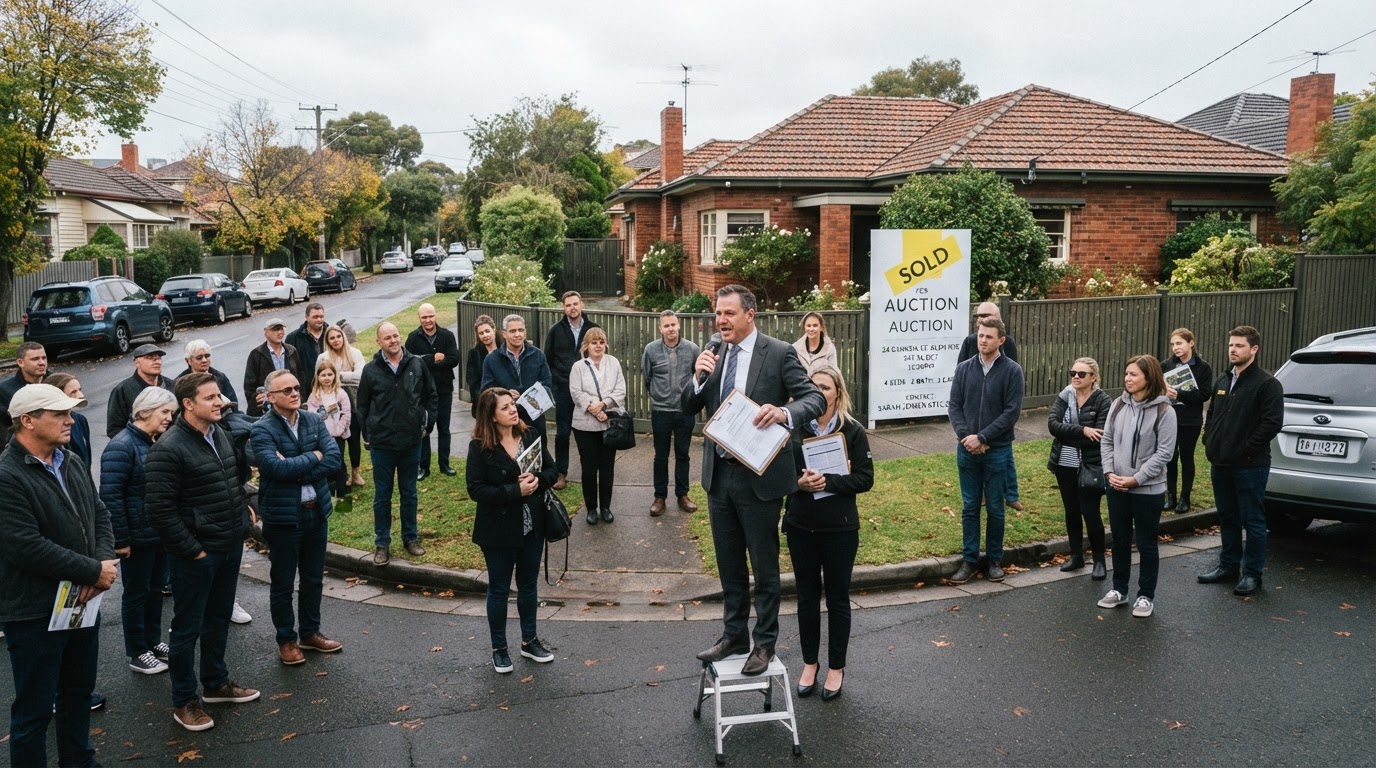
4. Auction Day
The auctioneer explains the conditions and conducts the bidding.
Bids are made openly and the auctioneer manages the process.
The seller will generally have a reserve price, which is the minimum amount they are prepared to accept.
A reserve price is not necessarily the same as the advertised price guide.
5. When the Property Reaches Reserve
If the bidding reaches the reserve price, the property can be sold to the highest bidder when the auctioneer brings the auction to a close.
In a successful auction sale, the purchaser is expected to sign the contract and pay the required deposit immediately.
The deposit is commonly 10%, although a different arrangement may be agreed before auction day.
6. What Happens if the Property Is Passed In?
If bidding does not reach the seller's reserve price, the property may be passed in.
The highest bidder is commonly given the first opportunity to negotiate with the seller.
However, this doesn't guarantee they will purchase the property.
In NSW, there is also no cooling-off period when contracts are exchanged on the same day as the auction after a property is passed in.
Important: No Cooling-Off Period
Buying at auction in NSW is a binding commitment without a cooling-off period.
This means your finance, contract review, inspections and purchase decisions should be addressed before you bid.
Never assume you'll have time to investigate significant issues after winning.
Step-by-Step Auction Preparation for Wollongong Buyers
Preparation is the foundation of a confident auction strategy.
Before attending your first auction as a registered bidder, work through the following steps.
Step 1: Get Your Finance Organised
Speak with your lender or mortgage broker to understand your borrowing capacity.
Obtain finance pre-approval where possible and discuss any outstanding lending conditions.
Remember that pre-approval is not necessarily final or unconditional loan approval.
You should understand what your lender requires before you make a binding auction purchase.
Also budget for additional purchasing costs, including transfer duty where applicable, inspections, conveyancing and moving expenses.
Step 2: Research Comparable Property Sales
One of the biggest mistakes first-time buyers make is relying entirely on the advertised price guide.
A price guide is not a guarantee of the final selling price.
Research recently sold properties that are genuinely comparable to the home you're considering.
Look at:
Suburb and immediate street location.
Property type and construction.
Land size and usable outdoor space.
Number of bedrooms and bathrooms.
Parking and accessibility.
Building condition.
Renovation quality.
Nearby amenities.
For example, a three-bedroom property in Figtree may not be directly comparable to another three-bedroom property on a larger block or in substantially better condition.
Understanding these differences can help you establish a more informed purchasing limit.
Step 3: Arrange Building and Pest Inspections
A home can look beautifully presented during an open inspection while still having issues that aren't immediately obvious.
Building and pest inspections can help identify matters such as:
Structural defects.
Water damage or moisture intrusion.
Roofing concerns.
Timber pest activity.
Drainage issues.
Maintenance requirements.
Depending on the property, additional specialist advice may be needed.
Understanding potential repair costs before auction day can help you decide whether the property is suitable for your budget.
Step 4: Review the Contract of Sale
Ask a qualified solicitor or conveyancer to review the contract before auction day.
They can help explain matters such as:
The contract terms.
Settlement requirements.
Deposit obligations.
Easements and restrictions.
Title and other legal issues.
Any proposed special conditions.
You can also discuss whether any contract amendments should be requested before bidding.
Do not leave your first contract review until after the auction.
Step 5: Investigate Property-Specific Risks
Depending on the location and property type, there may be other considerations.
For Wollongong and surrounding suburbs, buyers may need to investigate:
Flood risk and drainage.
Bushfire-related planning constraints.
Slope and retaining walls.
Coastal exposure and maintenance.
Building approvals and unapproved alterations.
Strata obligations for units and townhouses.
Local planning controls.
Not every concern applies to every property.
The important thing is to understand the relevant risks before committing.
Step 6: Register to Bid
Contact the selling agent to confirm the bidder registration process.
Bring the identification and any documents required.
If another person will bid on your behalf, arrange the necessary authorisation beforehand.
Step 7: Prepare Your Deposit
Confirm how much deposit is required and the accepted payment method.
The usual auction deposit is 10%, but a different amount or deposit arrangement may be agreed with the seller before auction.
Do not assume a lower deposit will be accepted without confirmation.
Step 8: Set Your Absolute Maximum Bid
This may be the most important step.
Before attending the auction, determine the maximum amount you can comfortably afford and are prepared to pay for that specific property.
Base your limit on:
Your financial circumstances.
Your lending arrangements.
Comparable sales evidence.
Property condition.
Expected additional costs.
Your long-term buying objectives.
Once you establish that limit, stick to it.
Your first home should be an exciting milestone, not a purchase that creates unnecessary financial pressure.
Bidding Strategies for First-Time Buyers
Auction day can be emotional.
Other buyers may bid quickly, the auctioneer may create urgency and you may feel pressure to make another bid.
Having a plan before the auction begins can help you remain focused.
Arrive Early
Get to the property early enough to check the auction arrangements and become familiar with the setting.
Confirm your bidder registration and listen carefully to the auction conditions.
Observe Other Auctions First
Before bidding on your first home, consider attending a few local auctions as an observer.
This can help you understand how auctioneers communicate, how bidding progresses and what happens when a property reaches reserve or is passed in.
Understand the Price Guide
The advertised price guide should be considered alongside your own market research.
Don't assume the property will sell within the advertised range.
Ask the selling agent relevant questions and use comparable sales to establish your own assessment of value.
Choose Your Opening Bid Carefully
You don't have to open the bidding if you're not comfortable doing so.
Some buyers prefer to observe the opening stages before participating.
Others may choose to bid earlier.
There is no single bidding approach that works for every auction.
What matters is that your decisions remain consistent with your preparation and maximum limit.
Bid Clearly and Deliberately
If you decide to bid, communicate your offer clearly to the auctioneer.
Don't allow another buyer's confidence or the speed of the bidding to influence how much you're prepared to pay.
Control Your Emotions
It can be disappointing to miss out on a property you've imagined living in.
But increasing your bid beyond your planned limit can create significant financial pressure.
A successful property purchase isn't about beating every other bidder. It's about buying a suitable home at a price you can afford.
Consider Professional Auction Representation
If you're uncomfortable bidding yourself, you may choose to engage an appropriately licensed buyer's agent to represent you.
This can be particularly useful when you've completed your research but would prefer experienced support during the auction process.
Frequently Asked Questions About Property Auctions in Wollongong
What is an auction price guide?
An auction price guide is an advertised price or range intended to provide an indication of the property's expected selling price.
It is not a guarantee of the final auction result.
NSW agents must comply with the applicable rules governing estimated selling prices and underquoting.
Always use your own research to assess what the property may be worth.
Can I make an offer before auction day?
Yes.
A seller may consider offers before the scheduled auction date.
However, the seller is not required to accept an early offer.
Before making a pre-auction offer, obtain appropriate legal advice about the proposed contract terms and any cooling-off implications.
Do I need a deposit on auction day?
If you're the successful bidder, you'll generally need to sign the contract and pay the deposit immediately.
A 10% deposit is common, but alternative arrangements may be agreed beforehand.
Confirm the exact requirements with the selling agent and your conveyancer or solicitor.
What happens if a property is passed in?
If the bidding doesn't meet the seller's reserve, the property may be passed in.
The highest bidder is often invited to negotiate with the seller.
A sale is not guaranteed, and the buyer and seller must still agree to acceptable terms.
Can I change my mind after winning an auction?
You should not bid on the assumption that you can withdraw afterwards.
An auction purchase in NSW does not provide a cooling-off period.
If you are the successful buyer, you are generally required to sign the contract and complete the purchase according to its terms.
Seek legal advice immediately if a serious issue arises.
Do I need a buyer's agent to bid at auction?
No.
You can register and bid independently.
However, some first-time buyers choose to engage a buyer's agent for property research, negotiation preparation or auction bidding services.
How a Buyers Agent Can Help First-Time Auction Buyers
Buying at auction involves more than simply being prepared to raise your hand.
An experienced local buyer's agent can help you understand the property, assess value and approach the auction with a strategy.
At Power Property Buyers, our approach combines local property knowledge, practical building-industry experience and independent representation.
Property Research
We can help assess whether a property matches your buying requirements and compare it with other recent sales.
Understanding Market Value
Rather than relying solely on an advertised guide, we look at relevant comparable properties and individual features that influence value.
Property Due Diligence
We can help coordinate appropriate professional inspections and identify areas requiring further investigation.
Auction Strategy
We can assist with setting a considered bidding limit, understanding the sales process and developing a strategy for the auction.
Auction Bidding and Negotiation
Where included in the agreed service, buyer representation can extend to bidding at auction or negotiating on your behalf.
The goal is not simply to secure any property.
It's to help you make an informed purchase that aligns with your budget and objectives.
Independent property advice can help first-time buyers feel more prepared when making a major financial commitment.
Local Insights: Buying Property at Auction in Wollongong
Different suburbs across Wollongong can offer different types of property and buying opportunities.
It's important to assess each area according to your needs rather than assuming all parts of the Illawarra market behave the same way.
Thirroul
Buyers considering Thirroul may be attracted to its coastal lifestyle and proximity to local amenities.
Individual property characteristics, land size, condition and location can make a significant difference to value.
Figtree
Figtree offers a range of established residential properties.
When researching auction listings, consider land size, topography, building condition and family-oriented features.
Dapto
Dapto may appeal to buyers comparing established homes and different property types within their budget.
As with any area, consider the property's condition, location, land characteristics and potential future costs.
Corrimal
Corrimal offers a mix of residential property types.
Review comparable sales carefully, particularly when comparing houses, townhouses and units.
Understanding the Local Market
Before bidding in any Wollongong suburb, research:
Recent comparable sales.
Local property types.
Building condition and land characteristics.
Relevant development or planning constraints.
Your finance and purchasing costs.
How the property fits your lifestyle or investment objectives.
Avoid basing your bid on broad suburb averages alone.
The individual property matters just as much as the location.
First-Home Buyer Assistance in NSW
If you're buying your first home, it's worth checking whether you qualify for government assistance.
Depending on your circumstances and the property, you may be eligible for transfer duty relief or other first-home-buyer support.
One program to investigate is the NSW First Home Buyers Assistance Scheme.
Eligibility requirements, property value limits and other conditions apply.
Your mortgage broker, solicitor or conveyancer can also help you understand how government assistance may affect your purchasing arrangements.
Final Tips for First-Time Buyers at Auctions
Before attending your first Wollongong property auction, remember:
Get your finance organised. Understand your borrowing position and any conditions that remain outstanding.
Research comparable sales. Don't rely entirely on the advertised price guide.
Complete your inspections. Investigate building condition and property-specific risks before bidding.
Have the contract reviewed. Obtain qualified legal advice before auction day.
Understand the deposit requirements. Confirm the amount and payment arrangements in advance.
Observe local auctions. Familiarise yourself with the process before participating.
Set a firm maximum bid. Avoid making decisions based on emotion or competitive pressure.
Consider independent representation. Seek professional support if you need help with research, negotiation or bidding.
Remember, the goal isn't simply to win an auction.
The goal is to buy the right property at the right price for your circumstances.
Secure Your First Wollongong Property With Confidence
Buying your first home at auction can feel intimidating.
But with preparation, research and a clear plan, the experience can become much more manageable.
Understanding the NSW auction process, arranging your due diligence and knowing your financial limits puts you in a stronger position to make informed decisions.
At Power Property Buyers, we help clients navigate property purchases across Wollongong, the Illawarra and the South Coast.
Whether you're preparing for your first auction or need assistance finding and assessing a property, we're here to help.
Ready to Buy Your First Home?
Thinking about purchasing property in Wollongong or the South Coast?
Speak with Power Property Buyers about your budget, preferred suburbs and property goals.
Michael brings over a decade of hands-on building-industry experience combined with local Wollongong and South Coast property knowledge to help buyers make confident, well-negotiated decisions.
Wondering what 'price withheld' means on a Wollongong property listing? Discover why sale prices are hidden, where to find reliable sales data and how to buy with confidence.